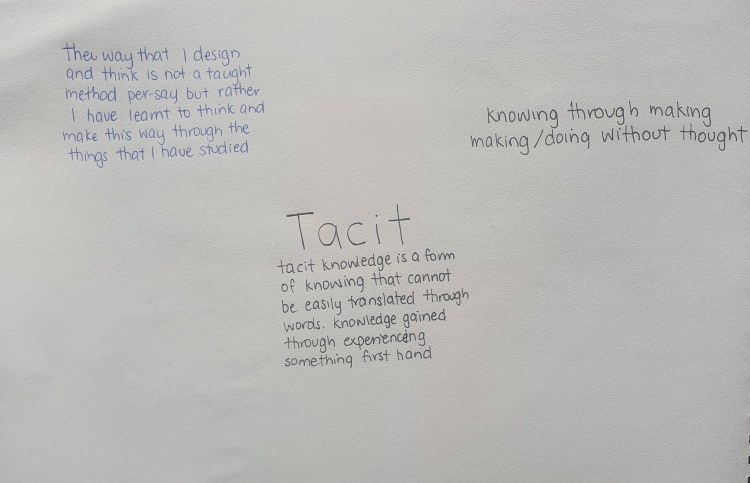
Tacit Knowledge is knowledge that we have learnt through things that we have done in our past, things like riding a bike and even putting one foot in front of another and learning how to walk. Tacit knowledge is knowledge that we have learnt without even knowing that we have learnt. Knowledge that we cannot put into words and explain, or draw a picture to explain what it is we have learnt.
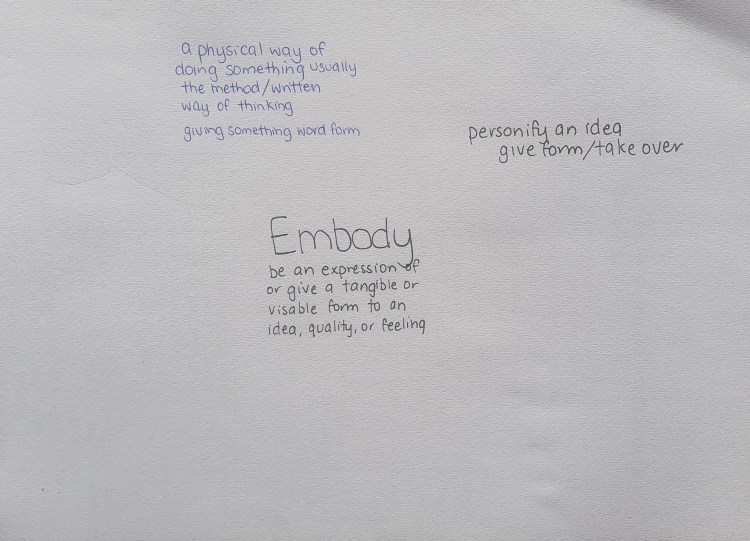
Embody Knowledge is knowledge that we can give tangible form to. Usually referring to an object form or can be visibly seen in an idea, quality or feeling. A form of knowledge where knowledge can be learnt through bodily form and interactions.
My area of research is centered around a very tacit way of doing and thinking. Driving my research is a series of worldviews that I have grown up into and shape the way that I am thinking and the approach I take to solving problems that I face. World views such as a very white western way of thinking, without a set religion my work and life is not underpinned by a god or gods. Studying spatial design in the past has allowed my ideas to take on a very material and objects based form, coming from the human body and stretching out into the world around us has meant that my ideas always branch off what I know and how I have grown up in a very British way of life in a first world country. Even though my spatial design experience has led me to give physical properties to things I am making, an embodiment of my underpinning research and idea, I still work in a very tacit way and even when I am unaware why I have done something there are my worldviews/paradigms that are driving the decisions that I am making.
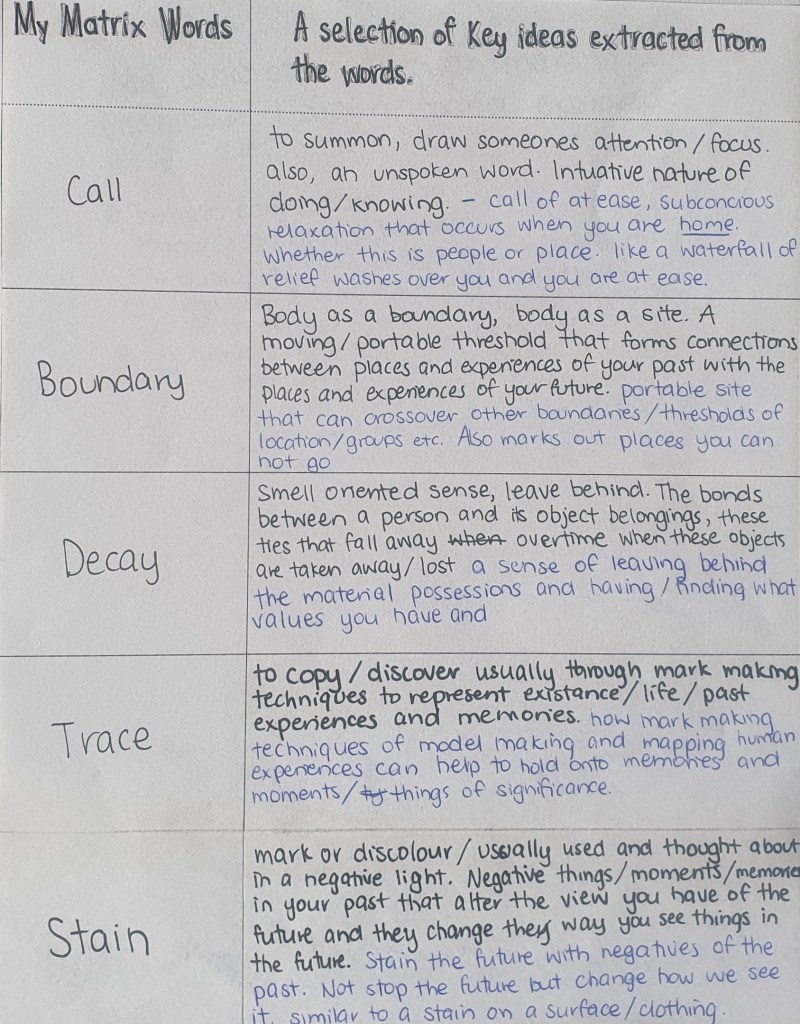
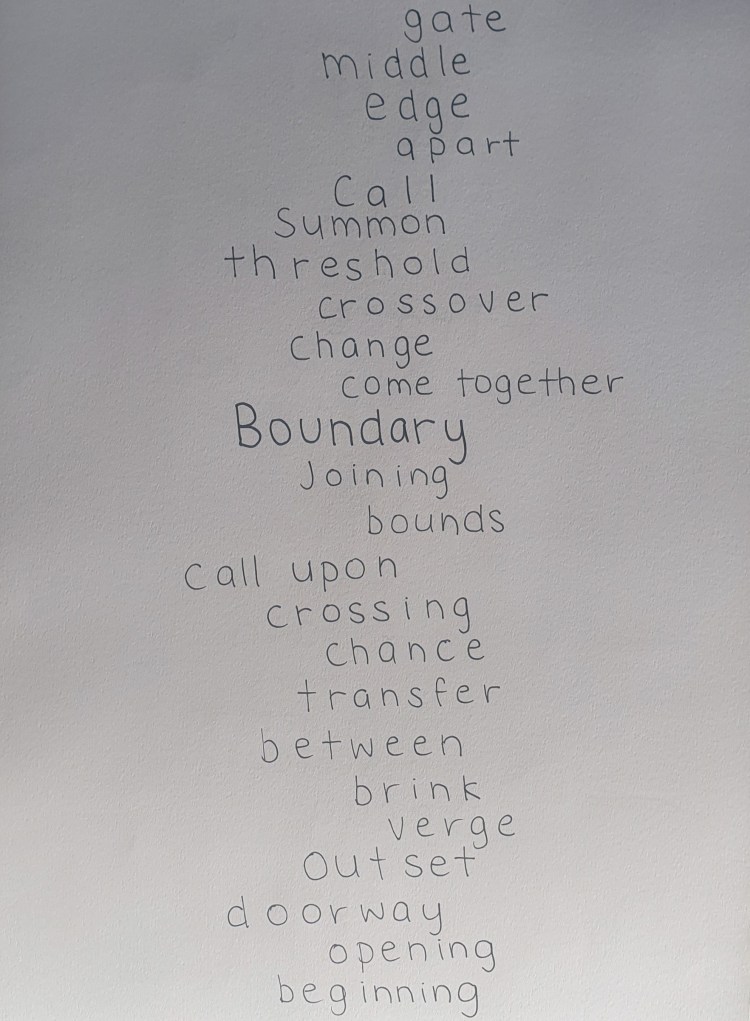
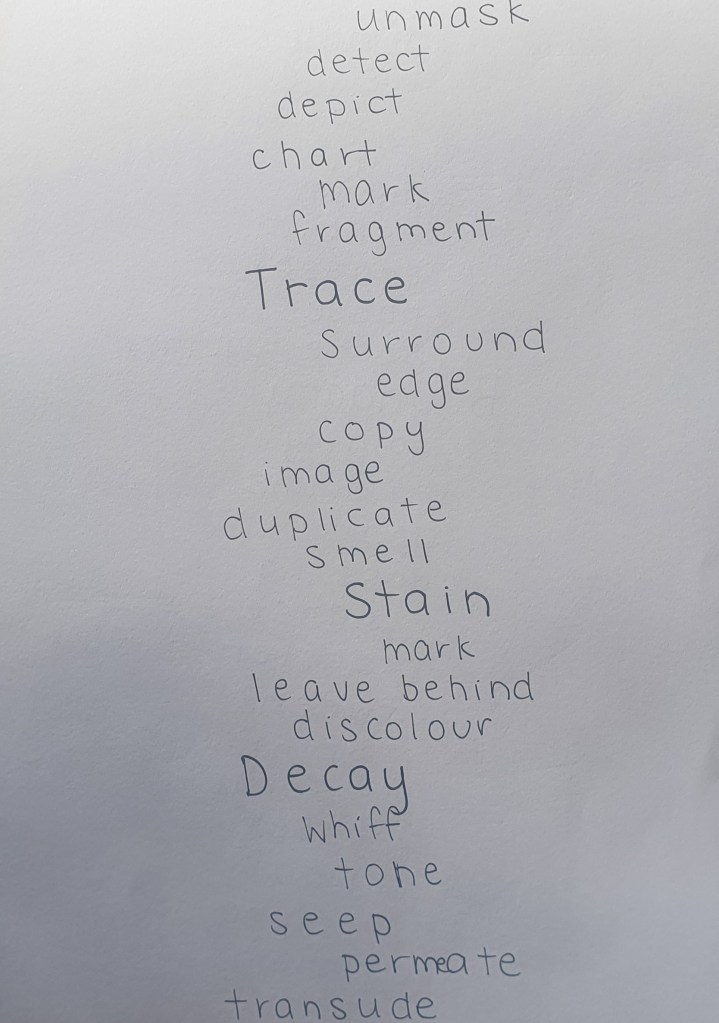
In the keywords section of this table I got a bit carried away with what certain keywords could mean so instead of writing down keywords I started to write sentences of how these matrix words relate to my practice through meanings and words that I have found that explain these words. To break apart these sentences and bring out the keywords I have attached a list as follows to show these main ideas that I am focusing on.
- Call-
- to summon
- draw upon
- unspoken word
- Boundary-
- body as a boundary
- body as a site
- moving/portable
- threshold
- forms connections
- places and experiences
- Decay-
- smell oriented sense
- leaving behind
- object belongings fall away
- Trace-
- copy
- discover
- mark making
- model making
- mapping through experiences
- Stain-
- negative connotations?
- discolour and dislike
- change how we see something
- alter the outcome
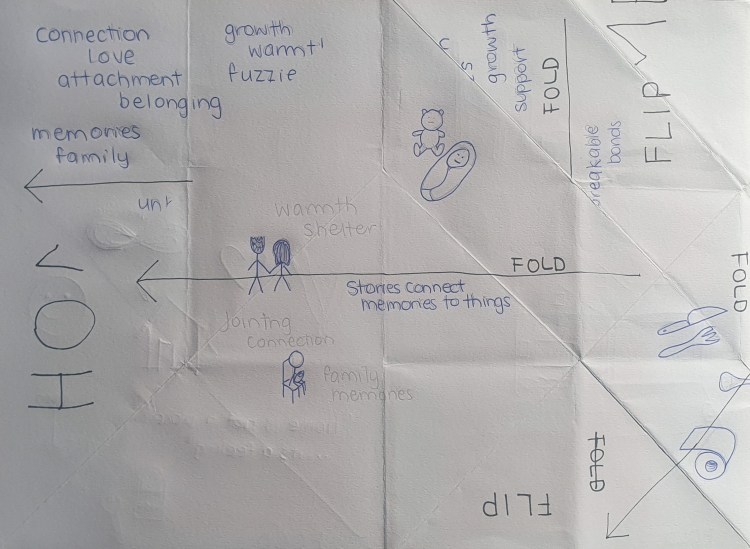
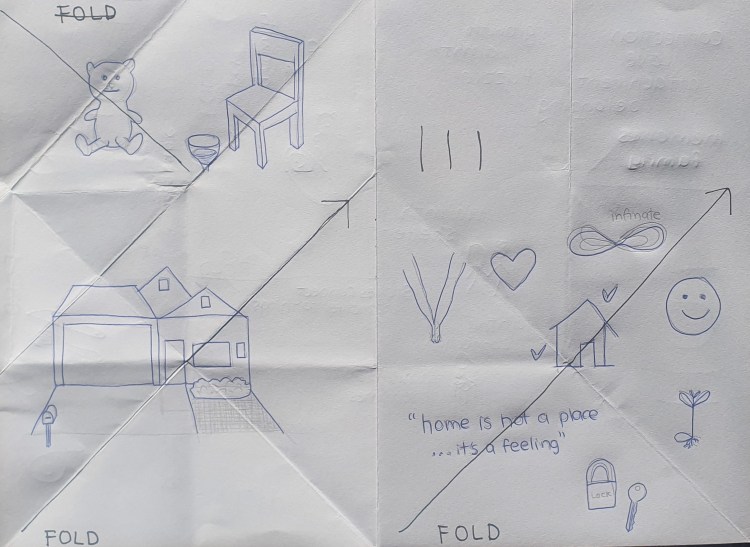
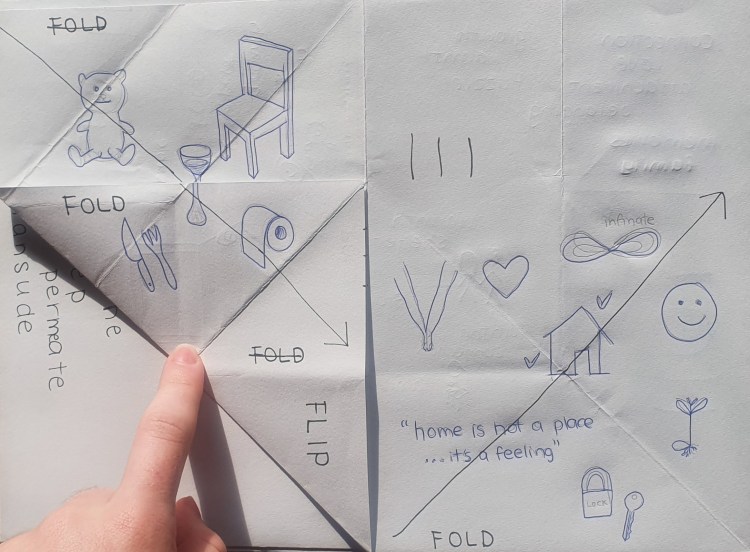
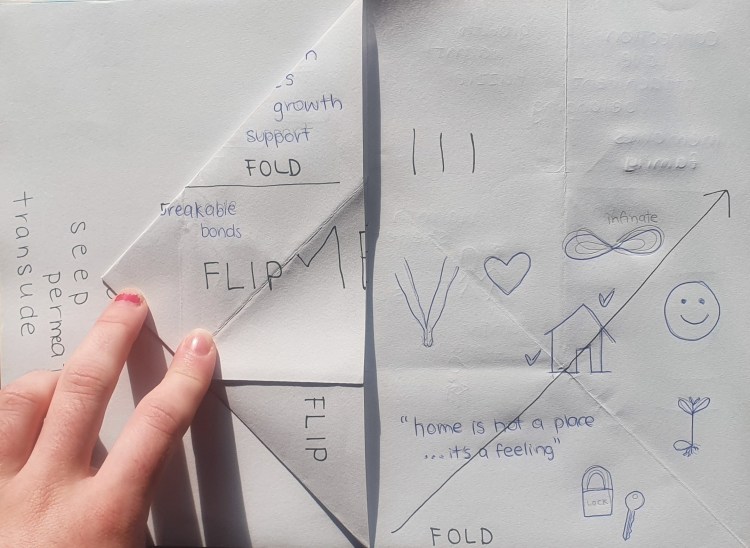
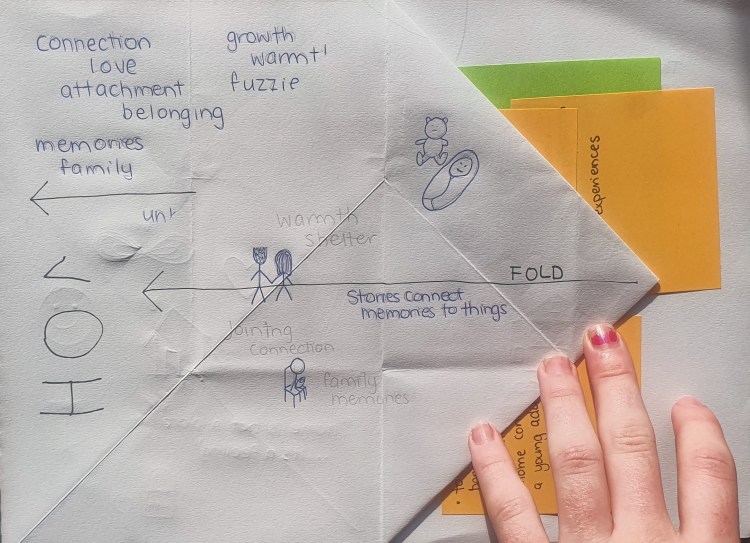
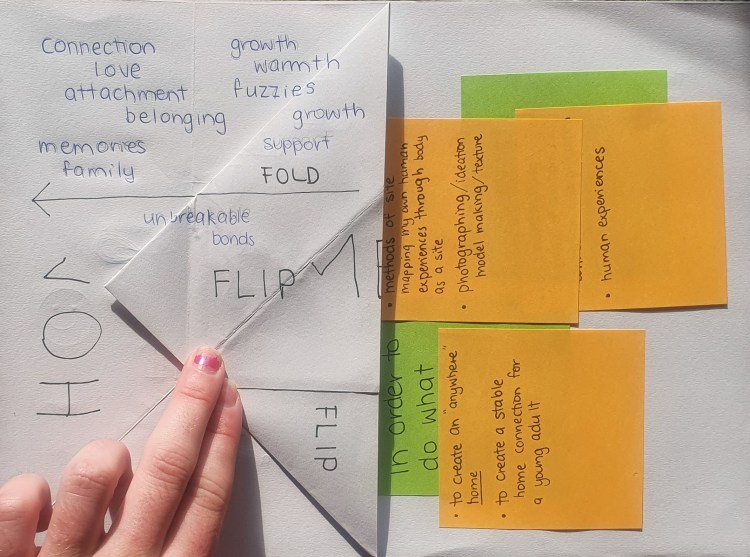
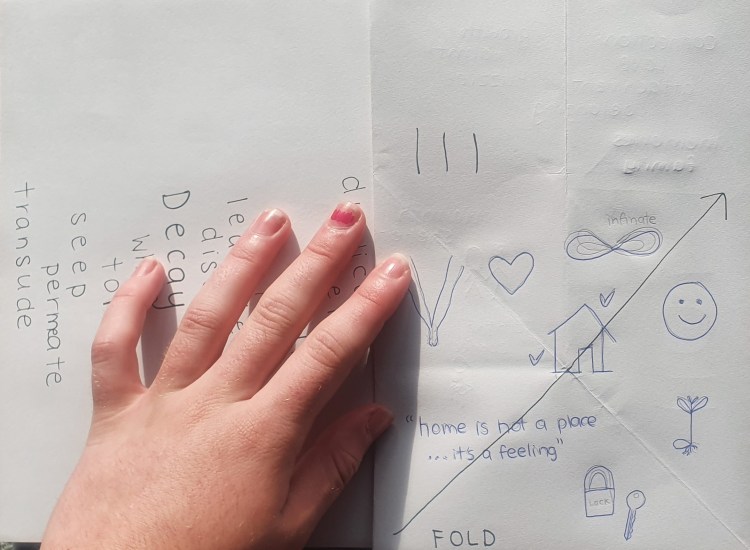
I have continued to work with this idea of home and how all of the different properties and elements that make up a home for someone like me who has grown up in a first world country with a British upbringing and how home even though it is all of the physical things it is also the ideas and relationships we have with the people who have been around us and these things. I have chosen to map this information in a kind of conceptual mapping/modelling/ideation page. This page when laid flat holds all of the elements of what home means for someone like me. however, when you start to fold the piece of paper up following the prompts you start to uncover that a home is more than just a building where you live. A home is a place of connection, of love and memories. It is not one or two of the elements that make up what home is, but rather is is a combination of all of these ideas that is what makes up HOME.
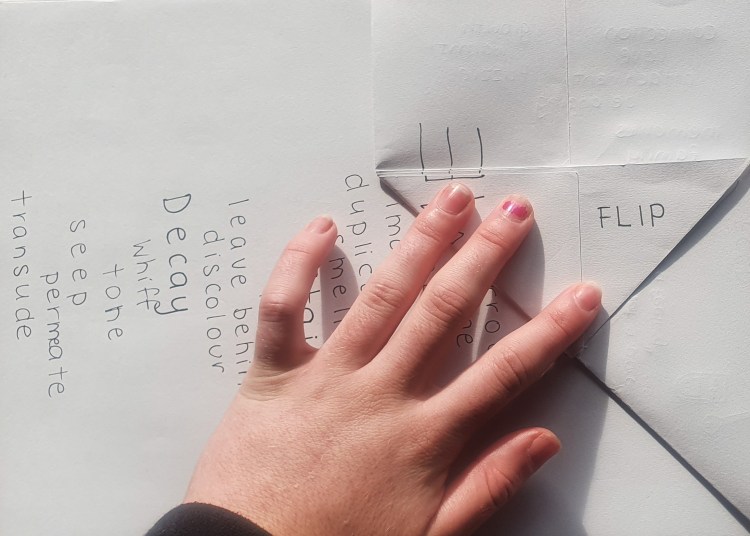
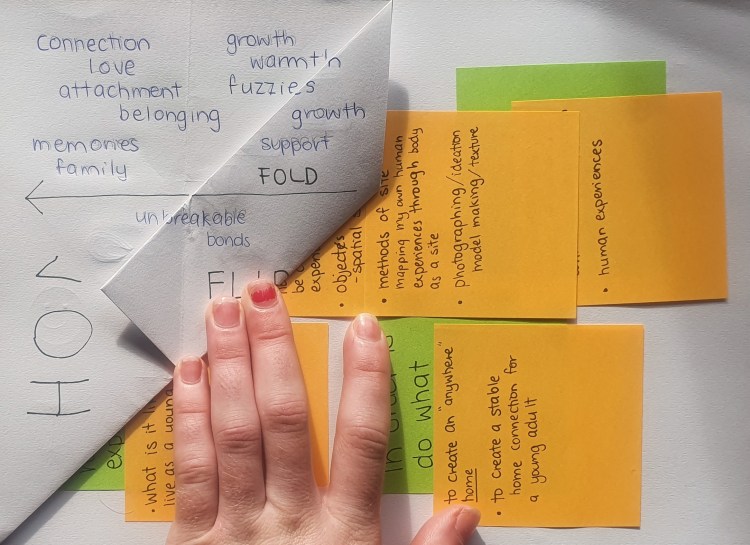
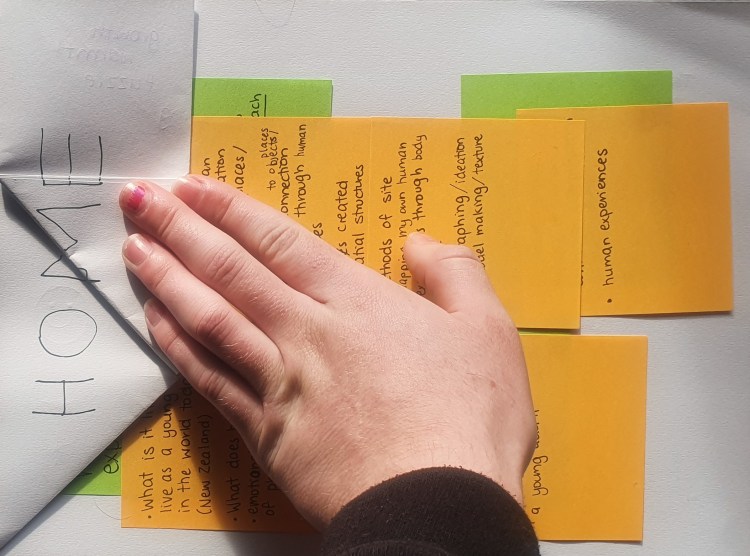
Following on from this idea of creating an intractable page in a book that reveals more and more information about home as you follow the prompts and flip trough i was really interested in continuing on this idea of interactivity as well as mapping into my next model. Recreating a sketch of a tire track that was left on my driveway when my parents left for work I was very interested to see how i could re-imagine and re-experience this sense of something so delicate and only present in the moment. I created my own version of this delicate moment through the use of cutting layers over and over and decreasing the holes slightly each time. So when the book is flipped through the tracks start to disappear, as the tracks on the road would over time. However, if the book is flipped backwards this allows the tracks to grow in depth and has the opposite effect on the viewer as we can watch the tracks grow deeper as if they are going to be around for a long time.
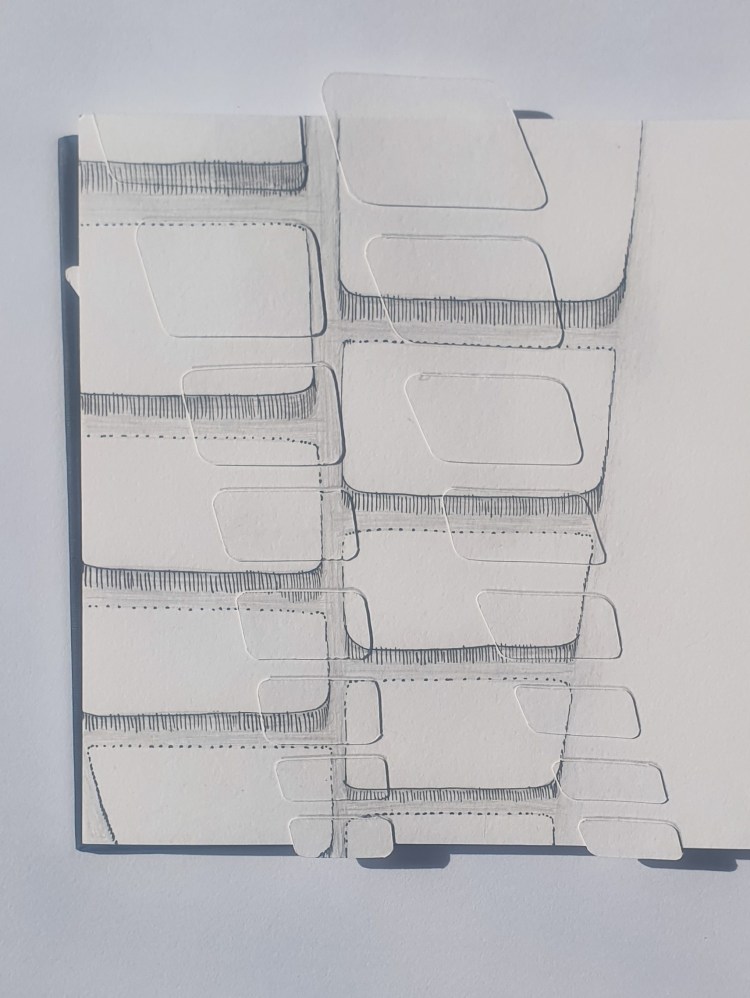
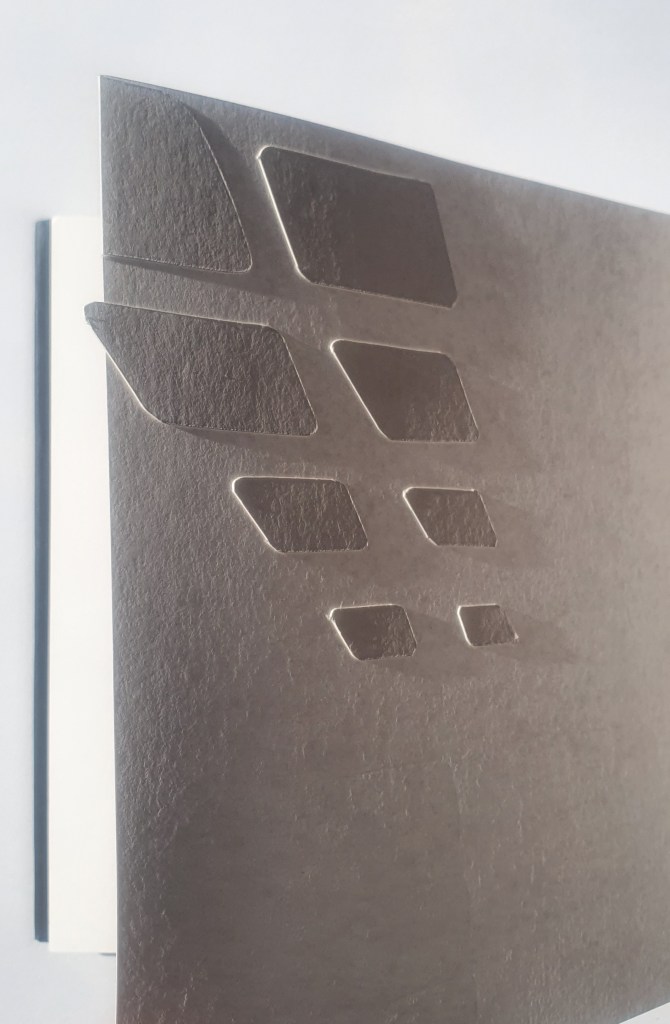
Taking the off cuts of the hollowed out book that I have created in that can be seen in the video above I have taken these through and stuck them to a piece of paper and played around with how these could “pop out”. Adding shadow lines around 2 edges of the cut outs and sitting these in the light allows these to stick further out of the page, similarly from the distance these pieces of paper look like they have been hollowed into the book. When lifting up the paper with these of cuts stuck on them it is then easier to see that they have been stuck on the top of the paper instead of hollowed into it. To further this idea of layering and shadows being used to create effect I have then started to drawn over these off cuts with the same pattern that I have used to cut them out. This repetition of pattern and shape has further emphasized that this shape and pattern is of large significance.Showing the crossing of the threshold from entry to exit the tire track announces the comings and goings of the day to day happenings in my family home.

 Georgia Christina Grace