Research Question
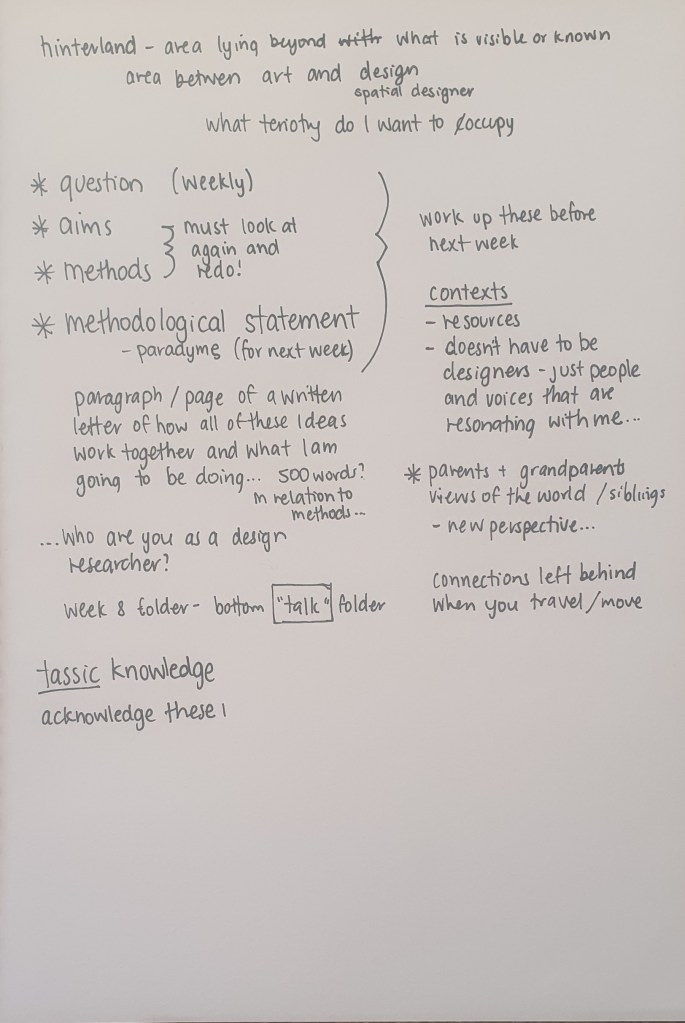
My new research question reads as follows; Considering the notion of home, what does ‘home’ mean for someone without a fixed address and how can elements that fit into a suitcase be reassembled, assembled and manipulated to create a home, by challenging political ‘norms’ of what it means to live as a travelling nomadic person?
Aims
- Using human centred design and nomad-ology, the study of nomadic persons (maybe more sub-nomadic not fully nomadic)
- Designed product/prototype as a potential outcome to
- Isolate the comforts of living at home
- Translate these into a portable and transportable object that can be taken from place to place as the person moves around
- Encourage people who are sub-nomadic that they belong wherever they decide to live, whether it be at home or away so they can feel more comfort, connection and …
- Young adulthood is a challenging time for anyone, with moving out of home and either entering the workforce full time or taking up tertiary study this is a time of complete instability for young adults.
- We as young adults are forced to make so many decisions about our future without being fully aware of the consequences these could have, not getting the job, getting the job then losing the job, not succeeding in the study, changing interests and changing study, and so on. But one thing that should always be stable to help us wherever we may go, and encourage the decisions that we make, is the comfort and stability of home.
- 42% of people worldwide are between the ages of 15-24, this age of young adulthood/youth.
- Of this 42%, on average 39.13% of these people worldwide are in the workforce.
- In a graph published by “ourworlddata” statistics show that in New Zealand in 2020 people aged 15 plus, 100,000 people will only have a primary education, 2.62 million will have a secondary education, and 1.03 million will have a post-secondary education
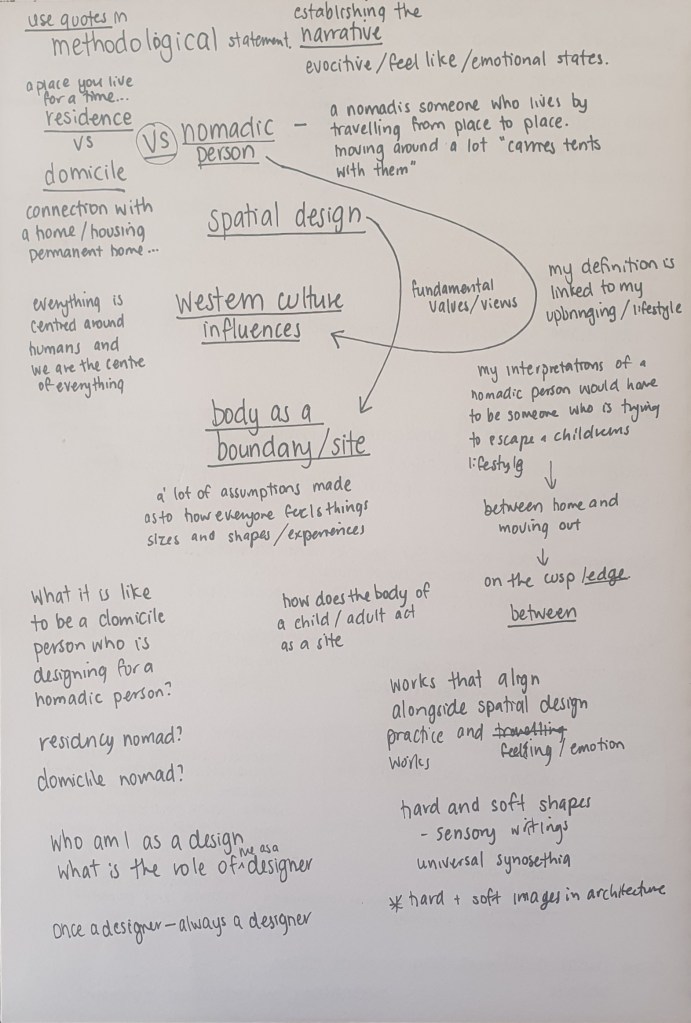
All of my research is circulated around this idea of what it is like to live and be a nomadic person, but after weeks and weeks of thinking this through it is not exactly a nomadic that I am interested in looking at and researching it is rather a “sub” nomadic person. I have chosen to add the word sub to the beginning of the word nomad to add a more specific approach to my research. I have chosen the prefix “sub” because sub means “a prefix indicating that the element is present in a relatively small proportion”. In more detail, this mean that even though I am interested in the principles of what it is like to live as a young adult travelling nomadic person. This therefore is a not the original and ordinary meaning of what everyone thinks when they hear the word nomadic.
Am I really interested in a nomadic person? or is it more of a “sub-nomadic” approach?
Methods
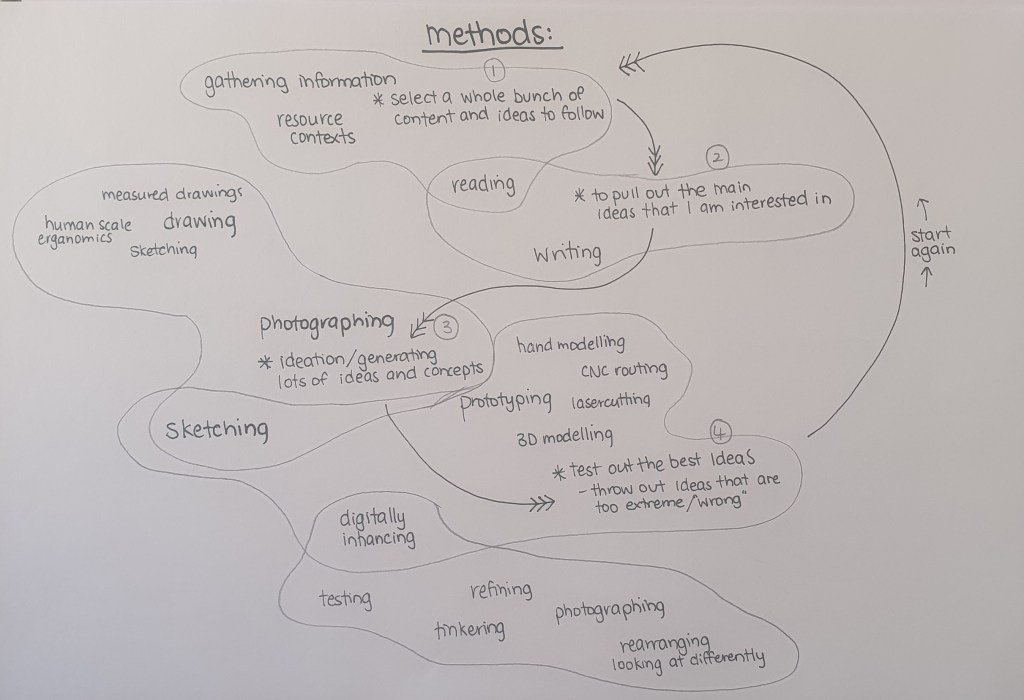
I decided to look back at my methods this week and pull out all the little details that make up the processes that I go through and group these into different areas. I have then named these groups based on their main focus these being; collecting/gathering, filtering, ideation, and test/enhance
Methodology and Paradigms
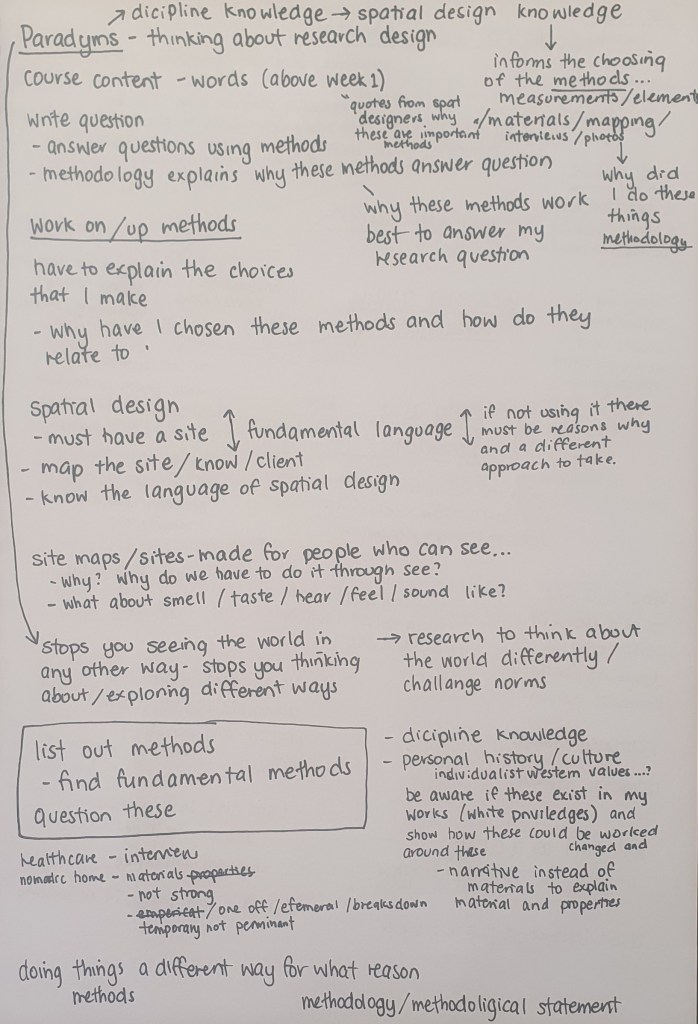
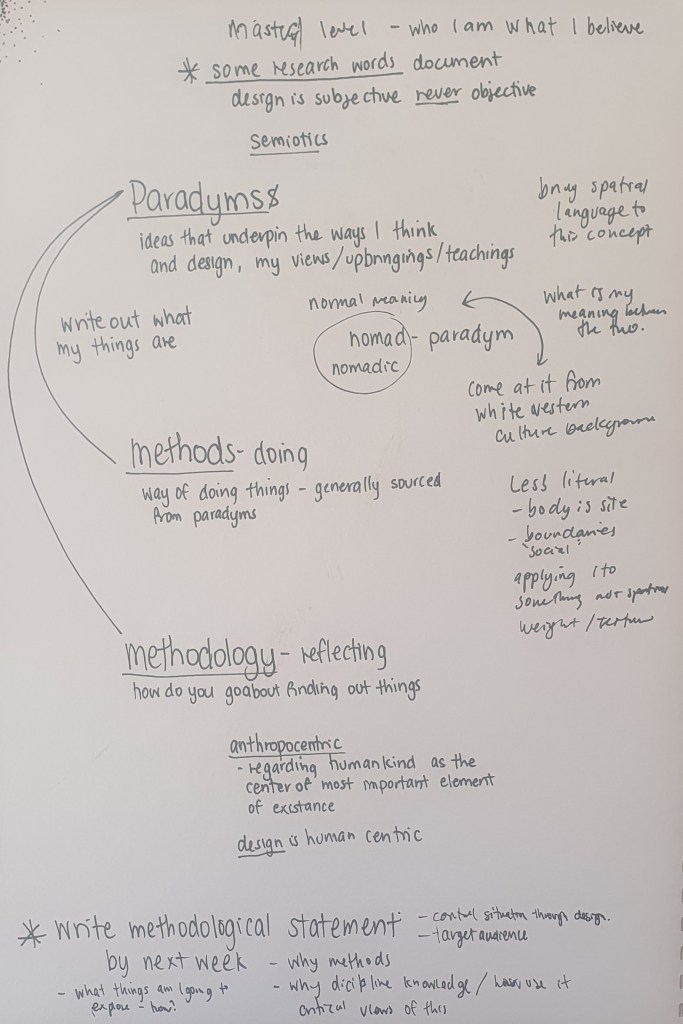
I have used the resource that we had been given to start planning how I am going to write my methodological statement. This tree like structure helps to lay out the different things of importance that make up the methodological statement. Things that underpin the writing like the paradigms, that are outside influences framing my research and methods, that I am using to carry out and make my research take shape.
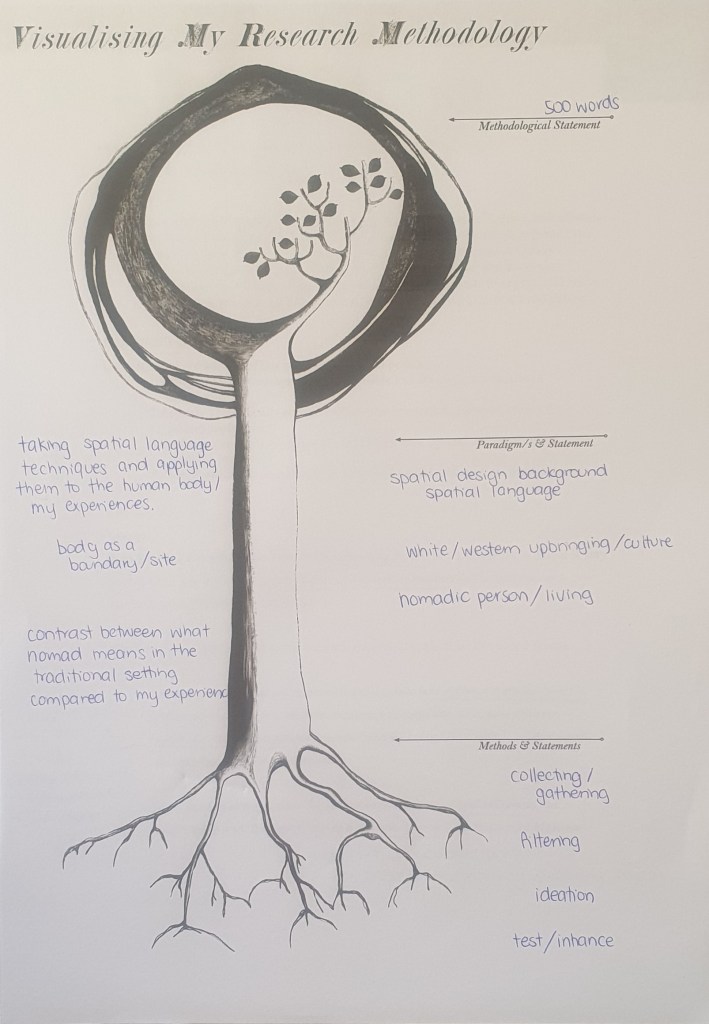
- Paradigms/statement
- A paradigm is a world view underlying the theories and methodology of a scientific subject.
- From my research I have thought and though some more about my world views and how they are driving my research the main world views that I have found are listed as follows.
- Spatial design background– this drives that way that I work to be in a very practical and usable way, taking a site and designing for a specific thing/location/person.
- White/western upbringing– taking most of the things I use on a day to day basis for granted and always expecting things to be on hand when I need them (easily accessible) this makes it so I don’t fully understand what other people go through.
- Nomadic person/nomadic living– combined with my western upbringing and my understanding of what it means to live as a nomadic person, challenge what this word means in the traditional sense. Sub-nomadic as another and better way to thing about who my research is targeting.
- Methods/statement
- I have broken my process methods into 4 different stages of a cycle that I follow (without intending to) when I go through a design process these methods are as follows.
- Collecting/gathering– this is the process when I collect and gather a lot of data and information that I find and interesting and I am very drawn to for some reason.
- Filtering– this is the process of cutting out what information that isn’t very useful and finding connections across different resources and information to build the basis of my project.
- Ideation– generating ideas from the resources that I have gathered
- Test/enhance– going through the ideas that I have come up with and comparing these back to the main goals of the project and the resources that I have been using.
- I have broken my process methods into 4 different stages of a cycle that I follow (without intending to) when I go through a design process these methods are as follows.
 Georgia Christina Grace